

Work / Flagship case study
Building GRANTED: AI that makes funding easier to find and manage
I co-founded GRANTED and built its platform and AI. This is how it works and what I learned.
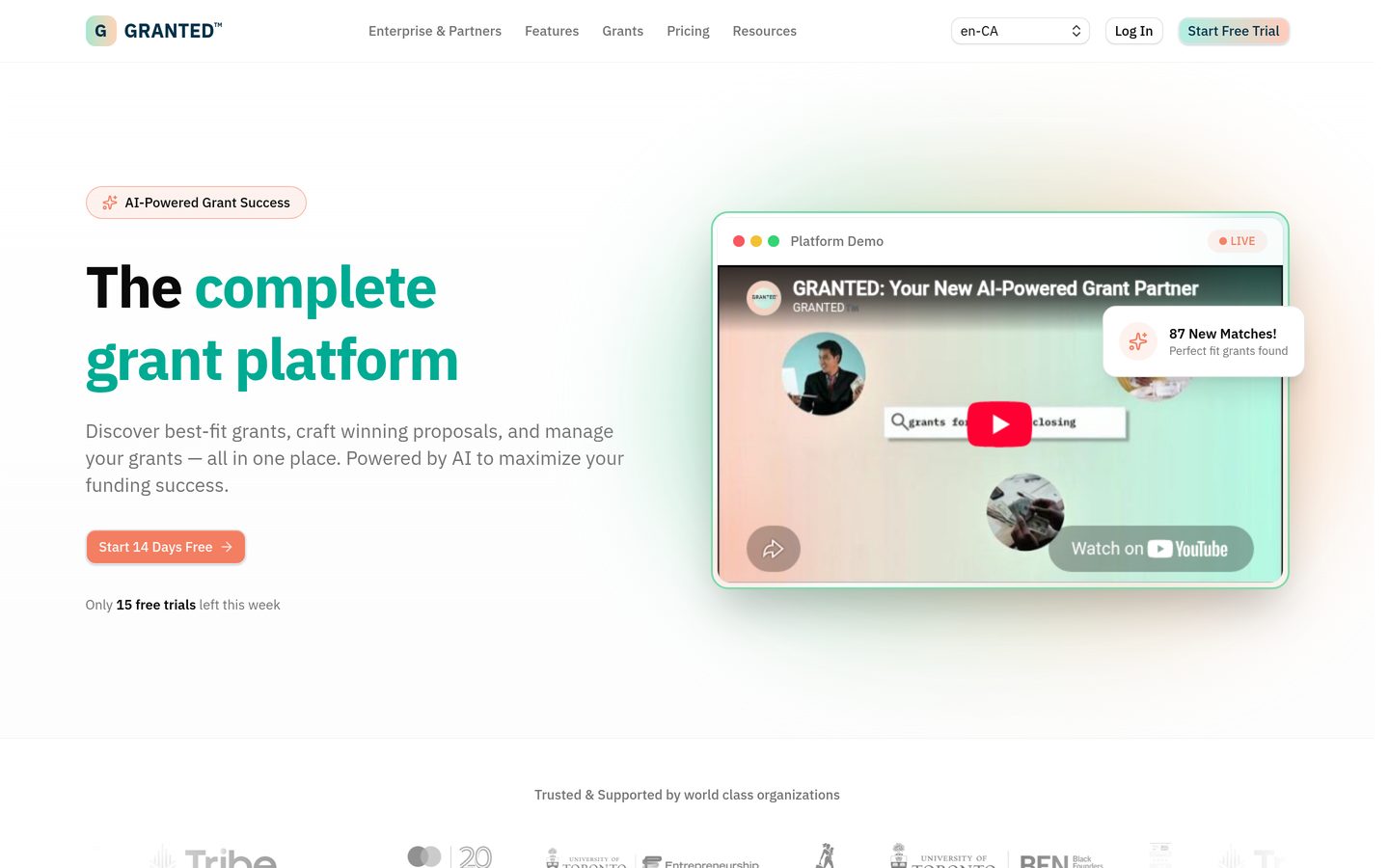
The problem
Finding and managing grants is slow, fragmented and opaque. Individuals, nonprofits, small businesses, grant consultants and accelerators spend hours searching scattered listings, decoding funder priorities, and re-typing the same information into different portals.
What GRANTED does
One place to find, understand and manage funding
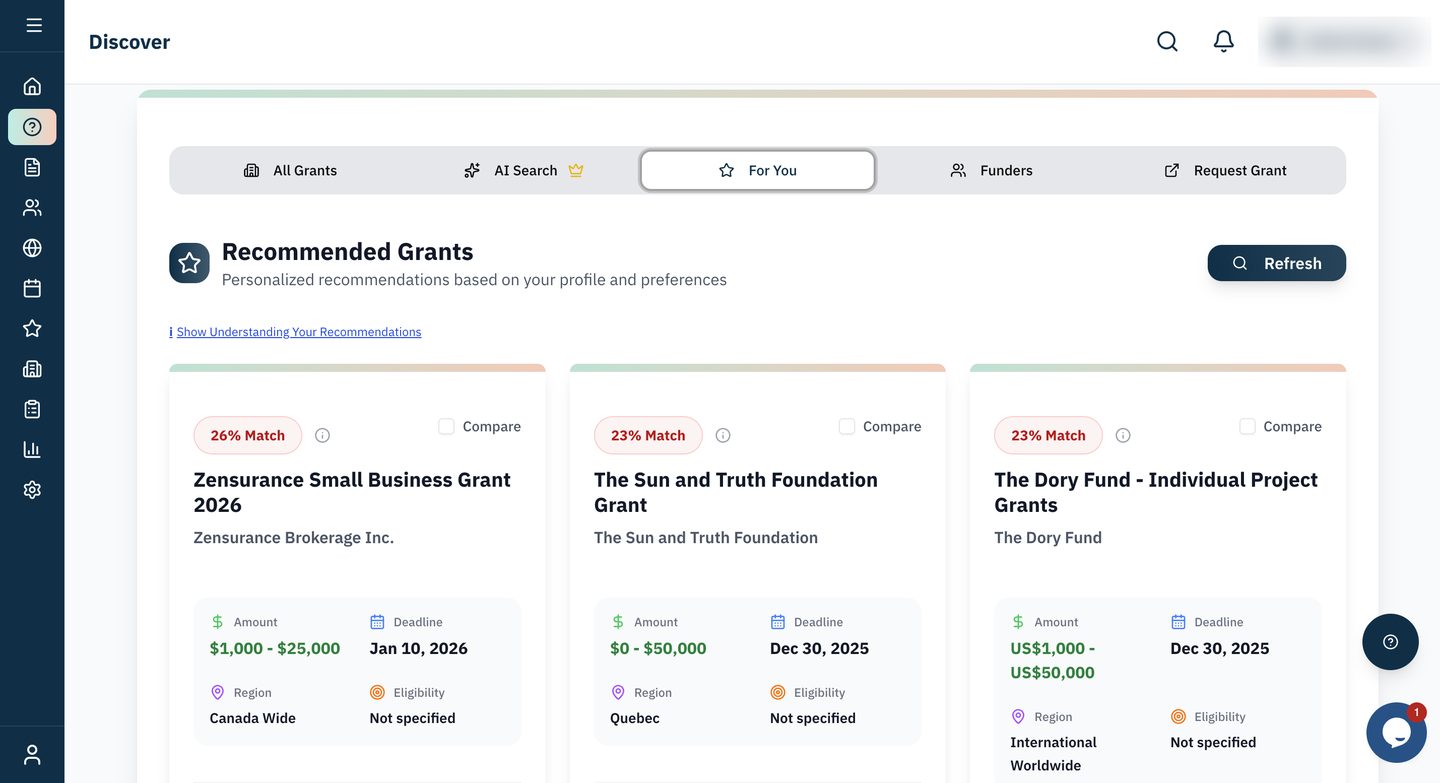
- AI grant matchingRecommendations from a continuously updated grant database, ranked by fit.
- Funder intelligenceWhat a funder supports and how well an organisation fits.
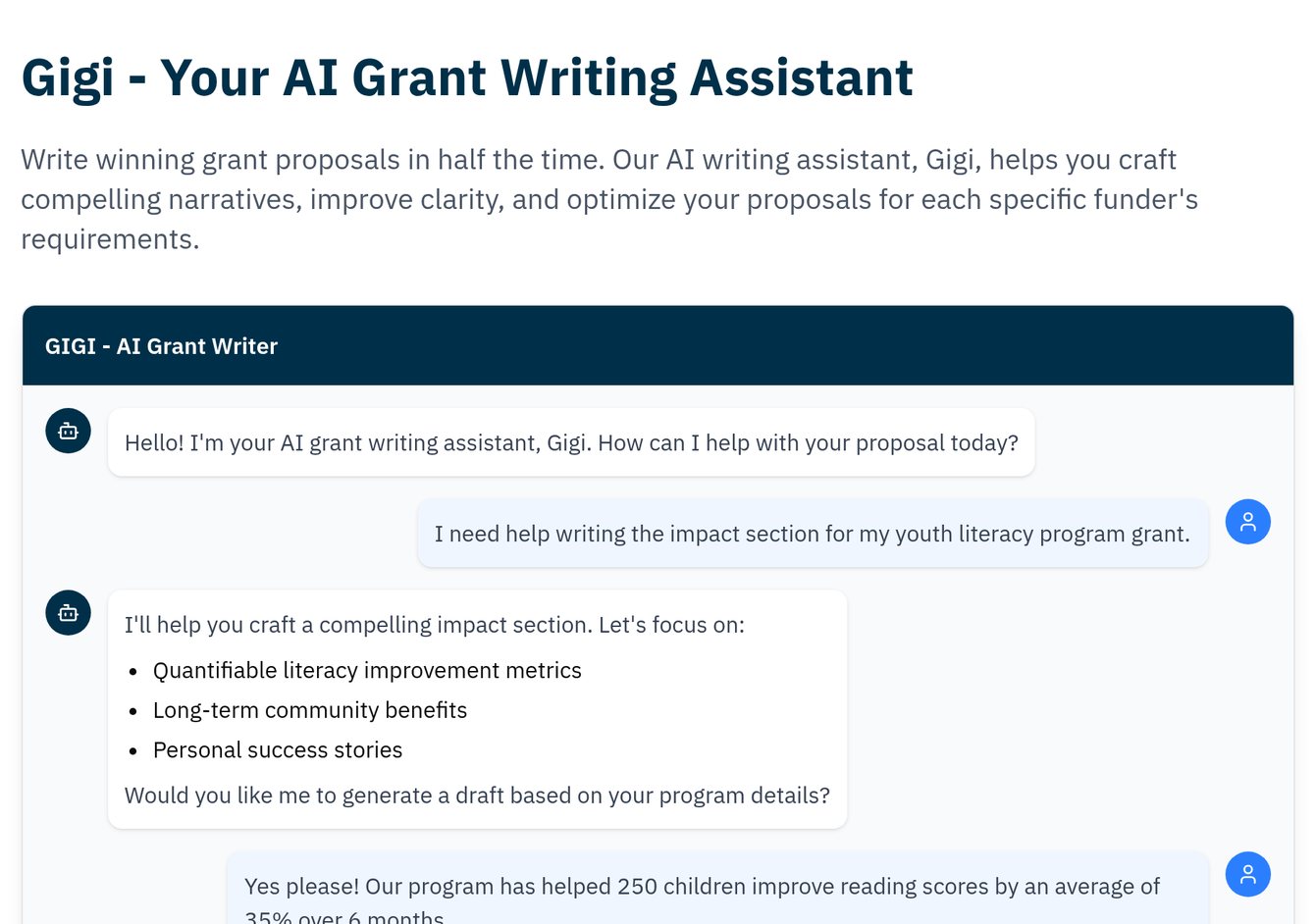
- AI writing assistanceHelp drafting application answers and reports.
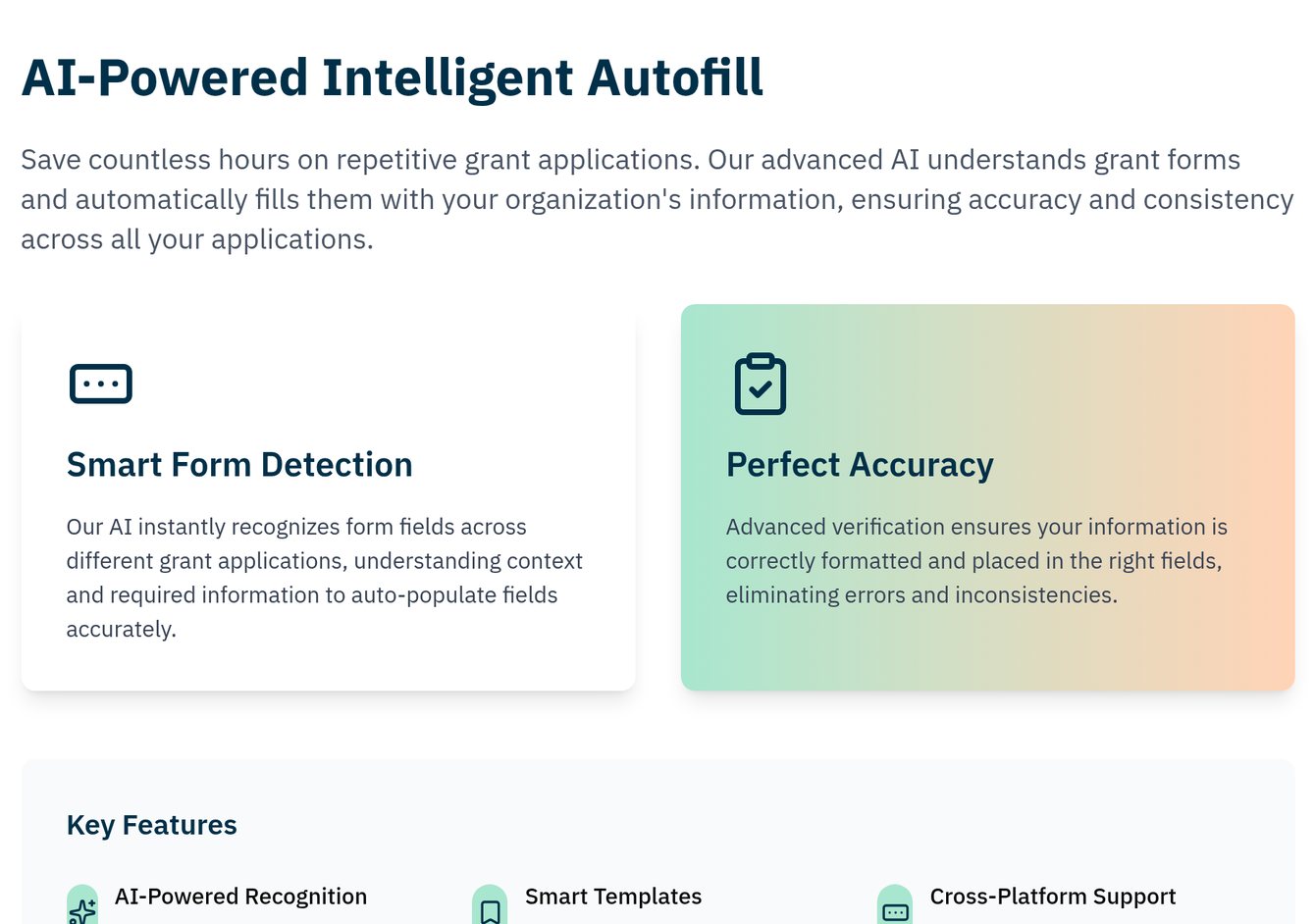
- Browser extensionFills in grant portals in Chrome, Edge, Firefox and Safari.
- Pipeline and reportingEvery application an organisation is tracking, in one view.
What I built
Platform architecture
A multi-tenant model of actors, entities, relationships and capabilities. It supports delegation, managed client accounts, a partner API, white-label deployments and audit logs, so consultants and accelerators can run GRANTED for many organisations at once.
The AI layer
Recommendations, readiness scores, a best-match cache, and AI-assisted application answers and reports. It runs on several model providers (Gemini, OpenAI and Claude) with a vector store (Astra DB), so each task uses the model that fits it.
AI agents with a person in the loop
I built a Model Context Protocol (MCP) server that gives Claude schema-aware access to the GRANTED database, with tools to search, create and update records. On top of it sits an agent review queue:
- The agent reads a funding page.
- It extracts the grant into structured data.
- It flags missing fields, such as deadlines and open dates.
- A person reviews and approves before anything is published.
A separate sourcing agent finds grants that are not yet in the database. The aim is a pipeline where AI does the heavy lifting and people validate.
Infrastructure and team
GRANTED first ran on AWS (EC2 and RDS Postgres) with AWS credits, and has since moved to Microsoft Azure with Azure credits. Transactional email runs on Resend, and I own the engineering and AI infrastructure budget. I also led hiring for AI and data roles, wrote the take-home exercises, onboarded interns, and wrote the QA guide and data dictionary.
Screens
Inside the product
From the public pages of granted.tech. Agent review and pipeline screens to follow.
Milestones
- Black Founders Network Smart Start program (2025), supported by KPMG Canada and the University of Toronto, where GRANTED won the Top Venture Award
- Black Founders Network Accelerate cohort (2026)
- Grants from funders including the Mastercard Foundation, the University of Toronto and the Federation of Black Canadians
- Community partnerships with SoloMama Launchpad (2025) and The Fashion Zone at Toronto Metropolitan University (2026)
- Cloud credits from AWS, then Microsoft Azure
What I learned
- AI is most useful when it hands a person a decision, not when it replaces one.
- A lean team can run a data-heavy product if agents do the repetitive work and people check it.
- Evidence beats features: validate what buyers will pay for before building the next thing.
Building something with AI?
I’m glad to compare notes on agents, review workflows and multi-model systems.