First 3 things to Consider in Starting a Business in Africa
In this episode, I discuss what I consider as the first 3 pertinent conditions to consider when you think of starting a business. The notes are below;
Who can start a business?
- You don’t need a university degree
- You don’t necessarily need a bunch of money in the bank
- A business experience is not a necessity
But 2 main things that you require to be successful in any business venture:
- A good plan
- A strong drive and the ability to bounce back
The 3 things to consider that I will be discussing are:
- Evaluating yourself
- Thinking of a business idea
- Doing a market research
- Evaluating yourself
A key question that you have to ask yourself is: Why do I want to start a business?
Once you have a reason, there are several other questions to ask yourself:
- What skills do you have?
- What are you passionate about?
- What kind of lifestyle do you want to live?
Honesty is key here
- Thinking of a business idea
If you already have a business idea then this part will probably not apply to you
Ways to come up with one;
- Ask yourself what’s next
- Fix something that bugs you
- Finding a new way of doing something does already existing
- Provide a cheaper alternative to something or a better
- Doing a market research
Set objectives
Is anyone else doing what you want to do?
Research
- similar products or services
- competitors
- potential partners

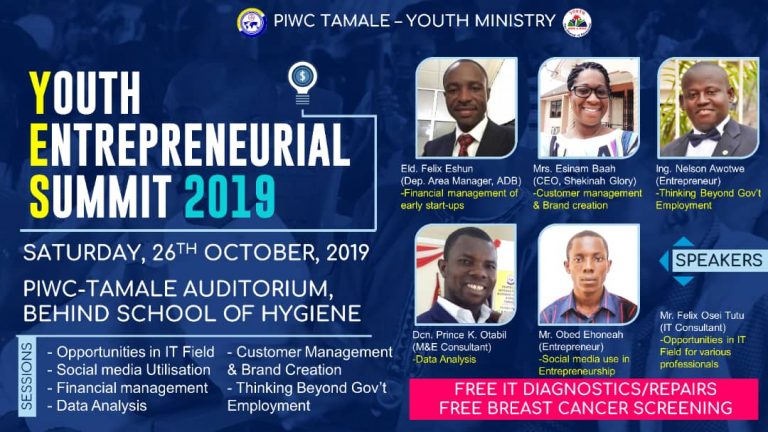
Dr. Ehoneah Obed (Pharmacist, Software Engineer, Health Informatician, Founder)
My work focuses on identity engineering, which is the deliberate process of designing and updating who you are, personally and professionally.
Most people experience identity as something fixed or accidental. It is shaped by parents, early success or failure, education, and society’s definition of what a “good life” looks like. They adapt to it rather than questioning it. What most people do not realize is that identity is not just something you discover. It is something you can actively engineer.
Personal identity engineering is about gaining control over how your beliefs, values, and self-concept are formed and reinforced.
Professional identity engineering is about translating that internal identity into skills, work, leverage, and visible contribution in the world.
When people feel stuck, it is rarely because they lack motivation or talent. It is because they are trying to change outcomes while leaving the underlying identity system untouched. Careers stall. Confidence collapses. Direction feels unclear. The system keeps producing the same results.
I learned this by rebuilding myself multiple times.
I trained as a pharmacist for six years. While working in hospitals, I began learning to code alongside my job. That led to building real software, selling products, transitioning into software engineering, completing a master’s degree in health informatics at the University of Toronto, and now building startups and systems full time. Each transition followed the same pattern. My identity did not change because I thought differently. It changed because I took specific actions that produced new evidence, and that evidence forced a new story about who I was capable of being.
That is the core mechanism behind identity engineering.
Identity updates when you intentionally generate evidence that contradicts your old self-image, then compound that evidence until the old identity can no longer run the system.
This blog is where I document that process. I write about how to design identity experiments that are small, controlled, and reversible. How to build proof-of-work that changes both how you see yourself and how the world responds to you. How to move forward without waiting for clarity, confidence, or permission.
This is not motivation and it is not coaching. It is systems thinking applied to human change.
I also write The Ledger, a weekly record of systems and experiments for building a life you own.
And I built the Identity Audit, a diagnostic tool that helps you understand your current identity state before you attempt to change it.
I am not presenting a finished theory. I am engineering this in real time, using my own life as the test environment. If you want more agency over who you are becoming, both personally and professionally, you are in the right place.