
Is Relying Too Much on AI Bad or Good?
We live in an amazing time where many things we once thought impossible are now real. Humans have always been known as the most intelligent beings on Earth. But, with the rise of super-smart AI tools that can do some tasks even better than us, this is now up for debate.
Many of us use these AI tools so much in our daily lives that we’re becoming very dependent on them. I’ve read many posts online where people worry that relying too much on AI might make us less smart over time.
So, I want to ask you: “Do you think depending too much on AI is bad or good?”
What do you think? Are you concerned that these tools might make us forget how to think for ourselves? Share your thoughts in the comments below.
Here’s what I think: When I think about this topic, I look at the past and guess about the future. Let me explain.
Years ago, people did math problems in their heads. Then, calculators came along. Some said using calculators would make people forget how to do math. But now, calculators are in every phone, and we use them without a second thought.
Another example is phone numbers. People used to memorize them. Now, we just save them in our phones. At first, some folks were worried about this change, but now it’s just normal.
Did these tools really make us less intelligent?
Whatever you think, here’s my view: The way we define “being smart” has changed because of these tools. Nowadays, if someone can use these advanced tools quickly and effectively, they’re seen as smart, even if they don’t solve the problem without the tools.
I predict that how we see intelligence will change even more in the future. Right now, we think someone is smart if they can remember lots of facts or difficult information. But AI tools can do this even better. So, maybe in the future, being “smart” will mean being really good at using AI tools.
Also, just like we don’t judge people who use calculators for simple math, there might come a time when using AI for even easy tasks will be seen as normal.
Whether you think AI makes us less smart or not, I believe these tools will become a big part of our lives soon. The world will change to include these tools more and more.
Change can be hard. We humans don’t like to change unless we have to. One area that might resist this change is education. Our schools might not be ready for a world where AI is everywhere. They’ll need to find new ways to teach, what to teach, and how to test students. But, ready or not, this change is coming. We should prepare for this future that’s heading our way.

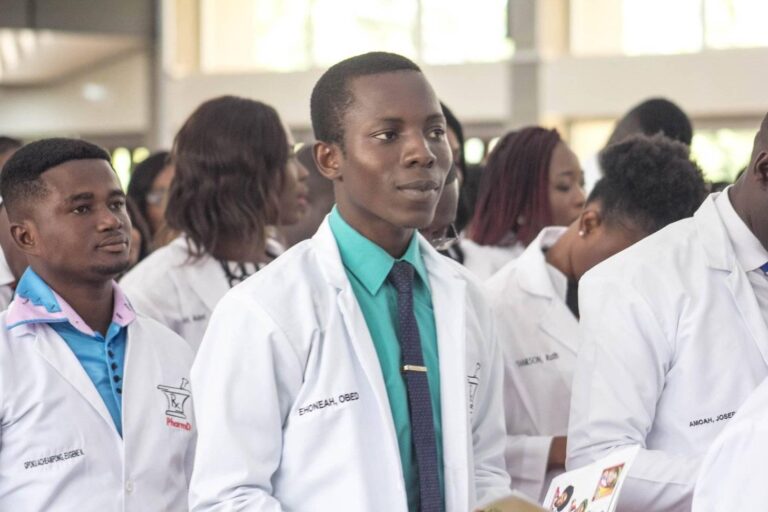
Dr. Ehoneah Obed (Pharmacist, Software Engineer, Health Informatician, Founder)
My work focuses on identity engineering, which is the deliberate process of designing and updating who you are, personally and professionally.
Most people experience identity as something fixed or accidental. It is shaped by parents, early success or failure, education, and society’s definition of what a “good life” looks like. They adapt to it rather than questioning it. What most people do not realize is that identity is not just something you discover. It is something you can actively engineer.
Personal identity engineering is about gaining control over how your beliefs, values, and self-concept are formed and reinforced.
Professional identity engineering is about translating that internal identity into skills, work, leverage, and visible contribution in the world.
When people feel stuck, it is rarely because they lack motivation or talent. It is because they are trying to change outcomes while leaving the underlying identity system untouched. Careers stall. Confidence collapses. Direction feels unclear. The system keeps producing the same results.
I learned this by rebuilding myself multiple times.
I trained as a pharmacist for six years. While working in hospitals, I began learning to code alongside my job. That led to building real software, selling products, transitioning into software engineering, completing a master’s degree in health informatics at the University of Toronto, and now building startups and systems full time. Each transition followed the same pattern. My identity did not change because I thought differently. It changed because I took specific actions that produced new evidence, and that evidence forced a new story about who I was capable of being.
That is the core mechanism behind identity engineering.
Identity updates when you intentionally generate evidence that contradicts your old self-image, then compound that evidence until the old identity can no longer run the system.
This blog is where I document that process. I write about how to design identity experiments that are small, controlled, and reversible. How to build proof-of-work that changes both how you see yourself and how the world responds to you. How to move forward without waiting for clarity, confidence, or permission.
This is not motivation and it is not coaching. It is systems thinking applied to human change.
I also write The Ledger, a weekly record of systems and experiments for building a life you own.
And I built the Identity Audit, a diagnostic tool that helps you understand your current identity state before you attempt to change it.
I am not presenting a finished theory. I am engineering this in real time, using my own life as the test environment. If you want more agency over who you are becoming, both personally and professionally, you are in the right place.


Great article, Ehoneah! Relying on AI can be both good and bad. While some worry it may make us less smart, I believe it allows us to focus on bigger problems. AI tools redefine intelligence and help us tackle complex challenges. We must adapt education to prepare for this AI-driven future. Embrace the change and leverage AI’s potential.
I totally agree. Just as you said, it may free up time for us to now focus on bigger problems that we have never thought we could fix. But more importantly, a lot of things like education and work is also likely to change. I really can’t wait to see the future of education and work.