You Can’t Lose If You Don’t Quit
I woke up this morning thinking about something that’s been bothering my mind for a while. This was because I’ve had a lot of people reach out to me, in my DMs and other contexts, complaining about struggles with learning something new.
The question I started wondering about was: Is it because they have set deadlines, or timelines within which they want to meet their learning goals? Or perhaps because the institution they are attending has imposed these deadlines on them? Is that why they are struggling?
So, the key question here is: If you had all the time in the world to learn that particular thing with which you are struggling, would you still have a problem with it?
For instance, if you’re starting to learn programming—this being your first time learning it—and you’re really struggling to understand a particular concept you’ve just started studying, if you had all the time in the world just to study that particular thing—although I know this is not reality—would you really still struggle?
When I think deeply about this, I come to the realization that there is a high possibility that if you keep doing it for a long while, if you spend enough time on it, you are eventually going to be able to figure it out.
If that is the case, then it probably means that most of the problems we are having when it comes to struggling to understand a concept are mostly linked to the time limits that we have or the time limits that we set for ourselves.
So, I think that if we are realistic with ourselves, knowing very well what our capabilities and limitations are, and able to adjust our timelines to ensure that we give ourselves enough time to learn what we need to learn, it will go a very long way to help us succeed in this journey.
In the end, what I think is that everyone, irrespective of how knowledgeable you are or not currently in any topic, if you had enough time for it, you’re going to be able to figure it out. This is applicable to just about anything in the world: if you spend enough time with it, maybe you won’t become the best in the thing, but eventually, you’re going to figure it out in your own way.
At least in a small way or in a way that’s enough to keep you getting what you really want to get from what you’re learning.
And now, that brings me to the point I started this post on: You can’t lose if you don’t quit.
Those people who struggle and eventually are unable to make it on this journey of learning new skill sets are essentially unsuccessful because they quit. So maybe they had their own timelines—for instance, somebody wakes up and says, “Hey, I want to become a software engineer in 6 months!” and after six months they are still struggling to find their feet so they quit.
You lose the moment you quit but for as long as you have skin in the game there is still a probability of success for you. And even though you do not have all the time in the world, I want to believe that if you do not give up and if you keep doing it, you’re eventually going to win with time.

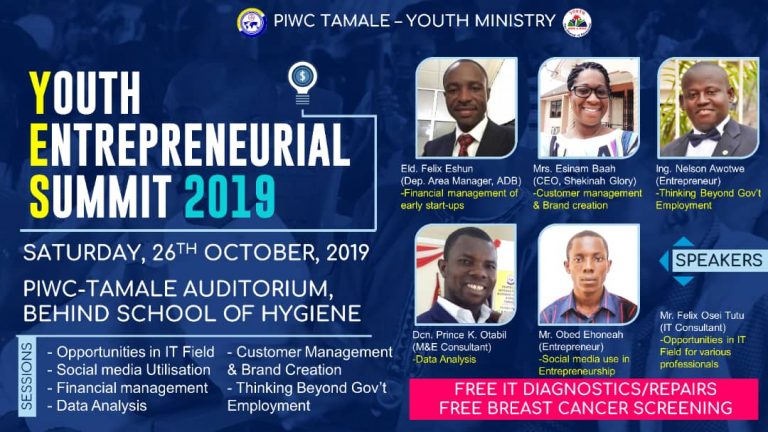
Dr. Ehoneah Obed (Pharmacist, Software Engineer, Health Informatician, Founder)
My work focuses on identity engineering, which is the deliberate process of designing and updating who you are, personally and professionally.
Most people experience identity as something fixed or accidental. It is shaped by parents, early success or failure, education, and society’s definition of what a “good life” looks like. They adapt to it rather than questioning it. What most people do not realize is that identity is not just something you discover. It is something you can actively engineer.
Personal identity engineering is about gaining control over how your beliefs, values, and self-concept are formed and reinforced.
Professional identity engineering is about translating that internal identity into skills, work, leverage, and visible contribution in the world.
When people feel stuck, it is rarely because they lack motivation or talent. It is because they are trying to change outcomes while leaving the underlying identity system untouched. Careers stall. Confidence collapses. Direction feels unclear. The system keeps producing the same results.
I learned this by rebuilding myself multiple times.
I trained as a pharmacist for six years. While working in hospitals, I began learning to code alongside my job. That led to building real software, selling products, transitioning into software engineering, completing a master’s degree in health informatics at the University of Toronto, and now building startups and systems full time. Each transition followed the same pattern. My identity did not change because I thought differently. It changed because I took specific actions that produced new evidence, and that evidence forced a new story about who I was capable of being.
That is the core mechanism behind identity engineering.
Identity updates when you intentionally generate evidence that contradicts your old self-image, then compound that evidence until the old identity can no longer run the system.
This blog is where I document that process. I write about how to design identity experiments that are small, controlled, and reversible. How to build proof-of-work that changes both how you see yourself and how the world responds to you. How to move forward without waiting for clarity, confidence, or permission.
This is not motivation and it is not coaching. It is systems thinking applied to human change.
I also write The Ledger, a weekly record of systems and experiments for building a life you own.
And I built the Identity Audit, a diagnostic tool that helps you understand your current identity state before you attempt to change it.
I am not presenting a finished theory. I am engineering this in real time, using my own life as the test environment. If you want more agency over who you are becoming, both personally and professionally, you are in the right place.